Reflection on the Samaritan woman at the well (John 4) and Christ as the living water that quenches the deepest thirst of the human soul.
Last Sunday, we witnessed the dazzling glory of the Lord during the event of the Transfiguration, a glimpse of the glory to come. The lesson was that the future ahead is meant to sustain us for the journey down into the valley. Today, the setting shifts from the heights of the mountain to the heat of the midday sun at a well in Samaria, as if moving from the overwhelming light of the mountain to the dry reality of human thirst.
Well of Encounter and the Living Water
Imagine the scene at Jacob’s well. It is high noon, the sixth hour. Based on the historical context of the time, women usually come to the well in the cool of the morning. But this woman comes alone in the blistering heat. Her isolation is a silent witness to her story.
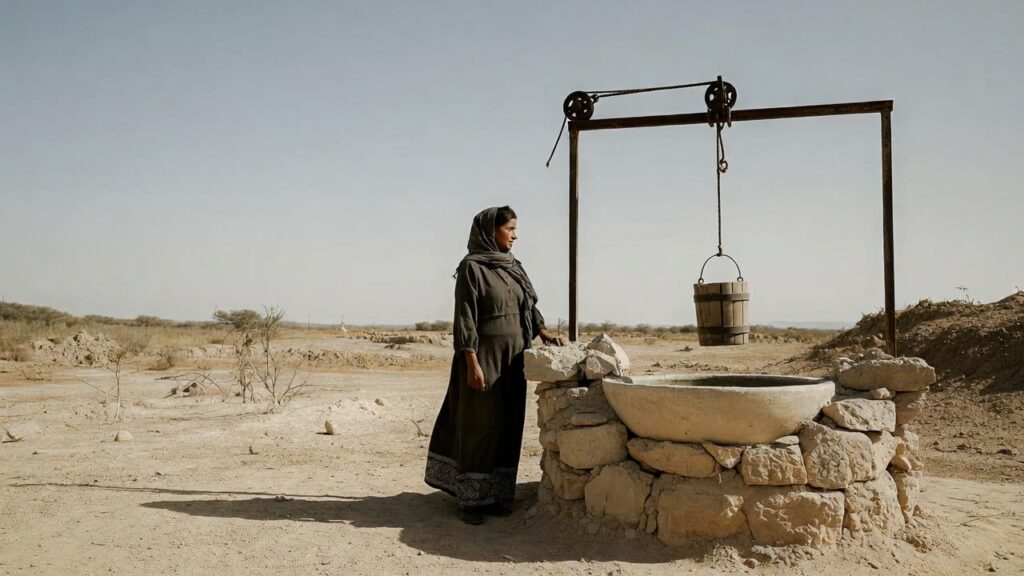
She is a nomad of the spirit, wandering through the broken terrain of five failed marriages and now living in a relationship that keeps her at the margins of her community. Her thirst is not merely for the water in the cistern before her. It is a deeper thirst for a substance capable of sustaining the soul, something like faith, which Scripture describes as “the realization of what is hoped for and evidence of things not seen” (Heb 11:1). What she seeks is not simply companionship but fulfillment, a healing presence strong enough to quiet the hollowness within.
Symbols of Deeper Yearning
Besides reminding her of past failures, her failed marriages reveal a deeper yearning that no human relationship has been able to satisfy. Each disappointment leaves another reminder of her vulnerability and inability to rescue herself from the cycle of longing and loss. Over time, the weight of these failures begins to shape her identity. Shame drives her into the shadows. She learns to move quietly through life, avoiding the gaze of others and seeking spaces where she will not be seen or judged.
In this way, she becomes the familiar figure of someone who has gradually accepted the narrative of failure imposed upon her. She lives as though anonymity were safer than hope, as though remaining unseen were the only defense against further disappointment. Her life has narrowed to survival at the edges.
Though the soul still longs for meaning, the expectation that her desires could truly be fulfilled has slowly faded. Yet beneath the surface of that guarded anonymity, the thirst of the soul persists, waiting for a source that no human effort or relationship has been able to provide.
The Grumble in the Desert
This scene at the well mirrors the ancient struggle of our biblical ancestors in Exodus and connects the woman’s longing to generational thirsts. In the desert of Sin, the Israelites find themselves thirsty. Despite the miracles they had witnessed, they begin to grumble. Their physical thirst leads to a spiritual crisis as they ask the haunting question, “Is the Lord in our midst or not?” (Ex 17:7).
The golden-mouthed preacher, Saint John Chrysostom, echoes and expands the Lord’s promise that “where two or three are gathered together in my name, there am I in the midst of them” (Mt 18:20). Reflecting on this passage, he notes that when believers gather in concord, Christ himself is present among them (Chrysostom, Homilies on Matthew, Homily 60).
Here, however, the Israelites are gathered in discord, as each person’s immediate material need takes priority over their shared trust in God. Their individual interests pull them in different directions, creating a discord that replaces the unity of faith. As Pope Benedict XVI observes, this testing of God arises when we demand that God prove his presence by satisfying our immediate, material expectations (Benedict XVI, Jesus of Nazareth, 2007).
Yet God responds with mercy. He tells Moses to strike the rock, and water flows. This “Rock of our salvation” (Psalm 95:1) is a type (typology), a foreshadowing of Christ himself.
The Thirst of the Savior
For deeper theological insight, we might consider the striking of the rock as symbolizing the encounter with (touching) the Rock of our salvation. To “touch him,” that is, to encounter Christ, even in the smallest gesture of faith, is to open oneself to the outpouring of grace, mercy, and abundance that flows from him as Lord and Savior.
Like the woman who believed that touching the hem of his garment would bring healing (Mk 5:27–34), or the Samaritan woman who came seeking ordinary water but encountered the living water of God (Jn 4:7–14), anyone who approaches Christ discovers that he is the source from whom divine life flows. For as Jesus proclaims on the last day of the great feast in Jerusalem, “Let anyone who thirsts come to me and drink. Whoever believes in me, as Scripture says: ‘Rivers of living water will flow from within him’” (John 7:37–38). The evangelist immediately clarifies that he was speaking of the Spirit who would be given to those who believe (John 7:39). What flows from Christ is not merely consolation but the very life of God poured into the human heart.

Deeper Mystery
Yet the mystery runs even deeper. The thirst of the human soul ultimately reflects another thirst, God’s yearning for the human person. In his theological reflections, Hans Urs von Balthasar observes that the divine desire for humanity is not a sign of lack in God but the overflow of divine love seeking a response. God’s love is so abundant that it reaches outward, longing to draw the creature into communion with himself (Hans Urs von Balthasar, Theo-Drama: Theological Dramatic Theory, vol. 3).
This insight sheds light on the striking moment when Jesus asks the Samaritan woman for water (Jn 4:7). At first glance, it appears that the Lord is the one in need. Yet beneath the request lies a deeper movement, namely, Christ’s mission, the thirst for the salvation of the soul before him. His request opens the door to reveal the living water that alone can satisfy the deeper longing of the human heart.
Missionary Thirst for Souls
The Lord’s thirst for souls must also become ours, for we are called to continue his work as disciples and witnesses. We too must cultivate that same fervent longing for the thirsty souls of our time. This is our missionary mandate: to bear witness to the Good News that alone satisfies the deepest thirst of the human heart.
This divine thirst becomes even more explicit at the climax of the Gospel when Jesus cries out from the cross, “I thirst” (John 19:28). His words express physical suffering and much more, the burning desire of the Redeemer to draw humanity back to the Father. The One who asks for water is the same One from whom the living water flows. In Christ, the thirst of God and the thirst of humanity meet, and in that meeting the streams of grace are released.
To approach Christ, therefore, is not merely to seek relief for our own thirst but to encounter the love that has already been seeking us. The soul that touches him discovers that the water it longed for was already flowing from the heart of the One who thirsted first for us.
The woman is initially skeptical. She sees the boundaries of history and gender. But Jesus is leading her from the water that perishes to the enduring water that wells up to eternal life.
When Jesus reveals her history, he is not shaming her. He is acting as the physician of the soul. As Sandra Schneiders notes in her analysis of this encounter, Jesus treats her as a theological partner, moving her from water as a utility to water as a symbol of the Spirit (Schneiders, The Revelatory Text, 1999).
Leaving the Water Jar
The most beautiful detail is what the woman does next. She leaves her water jar behind. The symbol of her daily toil is forgotten in the wake of the Living Water. She runs back to the town, no longer a hidden outcast but a witness on fire.
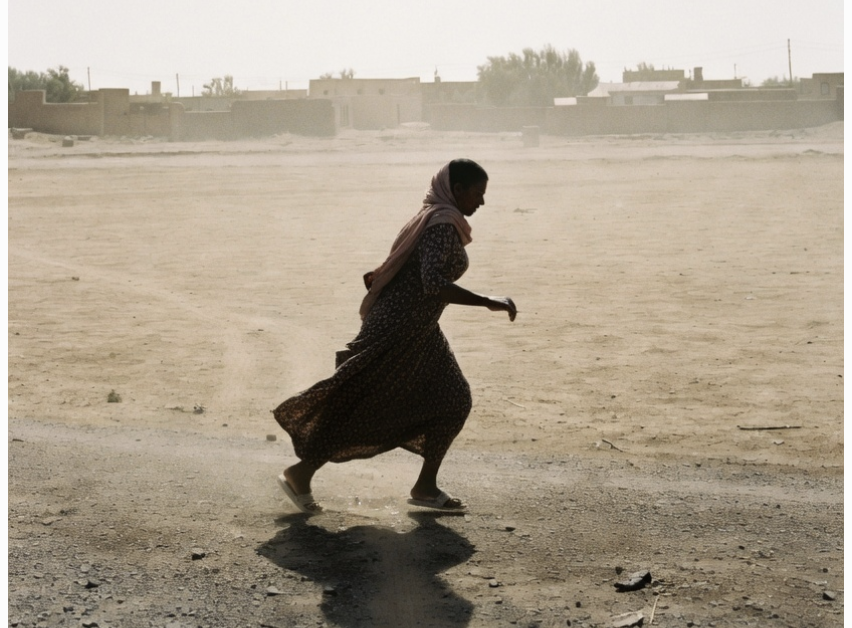
Here we see clearly what happens when someone encounters the Lord. Old patterns of fear and loneliness are overcome by the courage of witnessing.
Saint Augustine explains that the woman becomes a symbol of the Church, coming from the outsiders to find the Bridegroom (Augustine, 1888). She represents all of us who have tried to satisfy our thirst with things that ultimately leave us empty.
As Henri Nouwen famously reflected, we often live as haunted people, chasing shadows, until we discover that our deepest identity is being the beloved of God (Nouwen, Life of the Beloved, 1992).
The Water Jar Exchange
This week, identify your own water jar—the habits, attachments, or material comforts you reach for to satisfy your inner thirst. During your prayer time, consciously place that jar at the feet of Jesus. Ask him: “Lord, give me this living water.” Practice sacred pause of silence for five minutes.
As you pause, reflect along with me. In moments of difficulty, do I grumble like the Israelites, questioning whether the Lord is truly in my midst? What are the temporary fixes in my life that I have used to fill the void that only God can satisfy? How can I, like the Samaritan woman, become a bridge for others to “come and see” the Lord this week?
Pray
Lord Jesus, Savior of the World, thank you for waiting for me at the wells of my daily life. Forgive me for the times I have hardened my heart in the desert of my own making. Pour your Holy Spirit into my heart like living water. May the grace I receive from you become a spring within me, welling up to eternal life. Amen.
Third Sunday of Lent, Cycle C, Readings: Exodus: 17:3-7; Romans 5:1-2, 5-8; John 4:5-42
References
- Augustine of Hippo. (1888). Tractates on the Gospel of John (J. Gibb & J. Innes, Trans.). In P. Schaff (Ed.), Nicene and Post-Nicene Fathers, First Series (Vol. 7). Christian Literature Publishing Co.
- Balthasar, H. U. von. (1990). Theo-Drama: Theological Dramatic Theory, Vol. 3: Dramatis Personae – Persons in Christ (G. Harrison, Trans.). Ignatius Press.
- Benedict XVI. (2007). Jesus of Nazareth: From the Baptism in the Jordan to the Transfiguration. Doubleday.
- Nouwen, H. J. M. (1992). Life of the Beloved: Spiritual Living in a Secular World. Crossroad.
- Schneiders, S. M. (1999). The Revelatory Text: Interpreting the New Testament as Sacred Scripture (2nd ed.). Liturgical Press.
Related Articles
